
Everyday situations
Pay by card in Spanish with a four-line counter script.
Catch the total, ask ¿Puedo pagar con tarjeta?, understand the answer and close politely, practised in the order it happens at the till.
Son doscientos cincuenta pesos. You catch pesos and nothing else. The queue shifts behind you, the card is already in your hand, and the line you rehearsed this morning — ¿Puedo pagar con tarjeta? — suddenly feels like a speech.
That is the two-step panic at a counter: first the number, then the card question. This page practises the exchange in the order it really happens, with one short line to say at each step and the replies to expect. Read each line aloud; that is the whole method. Every example below is illustrative, not a recording of a real till.
Practise with a seven-day plan.
The free 7 Day Spanish Starter Plan gives you a pronunciation day, seven days of phrases with a dialogue, a listening task and recall prompts, three goal tracks, an answer key and a tracker, 10 to 15 minutes a day. Use it on the web or download the 18-page PDF.
The complete plan is free and open on the web. Enter your email for the printable copy.
Catch the total first.
A total rarely arrives as a number on its own. It comes as a short sentence, and the last word is usually the currency. That word is your anchor: when you hear pesos, the number has finished and it is your turn.
| You might hear | English | A reply that works |
|---|---|---|
| Son doscientos cincuenta pesos. | That’s two hundred and fifty pesos. | Con tarjeta, por favor. |
| ¿Efectivo o tarjeta? | Cash or card? | Con tarjeta, por favor. |
| ¿Cómo va a pagar? | How will you pay? | Con tarjeta, por favor. |
The amount is illustrative. The currency word changes by country: pesos in Mexico, euros in Spain.
If the whole number disappears, you do not need to guess. Three phrases cover it: Perdón, ¿cuánto es? (sorry, how much is it?), ¿Puede repetir, por favor? (could you repeat that, please?) and ¿Puede escribirlo, por favor? (could you write it down, please?). Puede is the polite singular, the safe choice with a stranger at a till. There are more in how to ask someone to repeat or slow down.
Ask about the card.
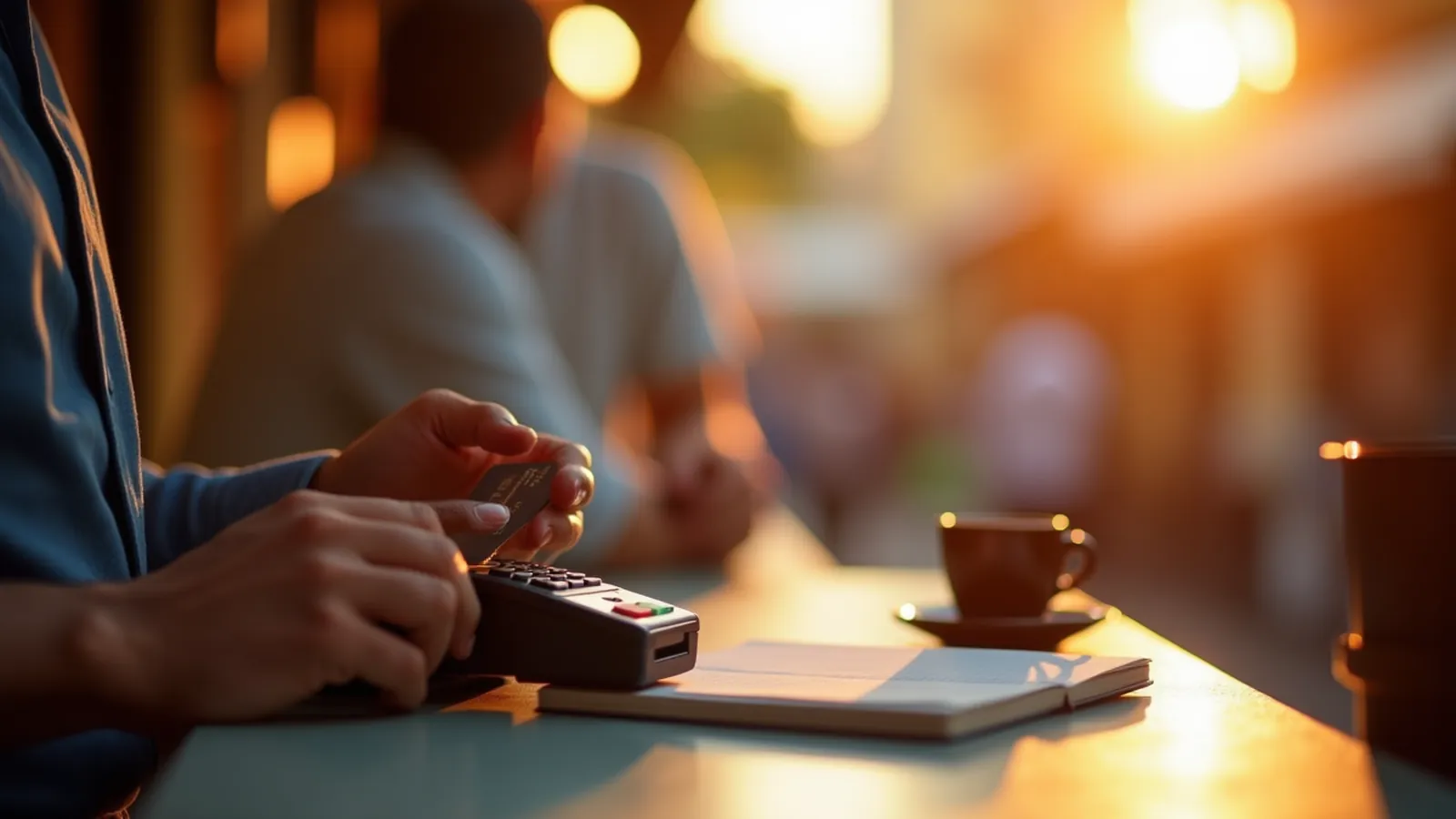
One phrase does most of the work at a till. Learn it as a chunk, so it comes out without assembling the grammar first.
| Spanish | English |
|---|---|
| pagar con tarjeta | to pay by card, or to pay with card |
| ¿Puedo pagar con tarjeta? | Can I pay by card? |
| ¿Se puede pagar con tarjeta? | Can you pay by card here? |
| ¿Aceptan tarjeta? | Do you accept cards? |
| El pago con tarjeta. | Card payment. |
| En efectivo, por favor. | In cash, please. |
Tarjeta is the card itself. English switches between pay by card and pay with card; Spanish uses con for both, so pagar con tarjeta answers either wording. ¿Aceptan tarjeta? talks to the staff as a group and is common in Mexico and much of Latin America. ¿Se puede pagar con tarjeta? avoids choosing a you-form and works anywhere. And el pago con tarjeta is the noun on a sticker or a payment screen; it is there to be read, not said.
Because ¿Puedo pagar con tarjeta? is about yourself, it stays the same whether you would use tú or usted with the person in front of you. You cannot get it wrong.
The full exchange.
Here is the whole thing in one place. Read it twice: once as the customer, once as the assistant. Saying the assistant’s half aloud is what trains your ear for the reply you will actually get.
| Who speaks | Spanish | English |
|---|---|---|
| Assistant | Son doscientos cincuenta pesos. | That’s two hundred and fifty pesos. |
| You | ¿Puedo pagar con tarjeta? | Can I pay by card? |
| Assistant | Sí, claro. Pase la tarjeta, por favor. | Yes, of course. Go ahead with your card, please. |
| You | Gracias. | Thank you. |
| Assistant | Ya está. ¿Quiere el recibo? | Done. Would you like the receipt? |
| You | No, gracias. Hasta luego. | No, thank you. See you later. |
An original practice dialogue, not a recorded conversation. A real shop may add its own questions about bags, loyalty cards or receipts.
Normal speed.
Read the table aloud without stopping, even where you wobble. Wobbling is information, not failure.
Half speed.
Break each line where the stress falls: ¿Puedo pagar / con tarjeta? and doscientos cincuenta / pesos. Slow is a speed, not a whisper.
English covered.
Answer each assistant line out loud before you look at the next row. If nothing comes, look, then go back one line and try again.
Once these lines feel familiar, put them next to the words that come before and after: the café ordering dialogue covers the order, and the bill article covers the end of a sit-down meal.
Understand the answer.
The reply is short, usually two or three words. Learn the two yes forms and the one no that matters.
| You might hear | English |
|---|---|
| Sí, claro. | Yes, of course. |
| Sí, aceptamos tarjeta. | Yes, we accept cards. |
| No, solo efectivo. | No, cash only. |
| La terminal no funciona. | The card machine isn’t working. |
| Firme aquí, por favor. | Sign here, please. |
If you hear solo efectivo, the visit is not over. Answer Vale, en efectivo and pay what you have, or ask ¿Hay un cajero cerca? (is there a cash machine nearby?). Vale is everyday in Spain; De acuerdo travels better across countries.
The machine has more than one name. In Spain you will hear el datáfono; in much of Latin America, including Mexico, la terminal. You may be asked for el PIN or la firma (a signature).
Spelling point. Solo efectivo writes solo without an accent. Current Real Academia Española guidance is to write the adverb solo without a tilde where there is no risk of ambiguity; an older sólo still turns up in some printed materials.
Thank the assistant.
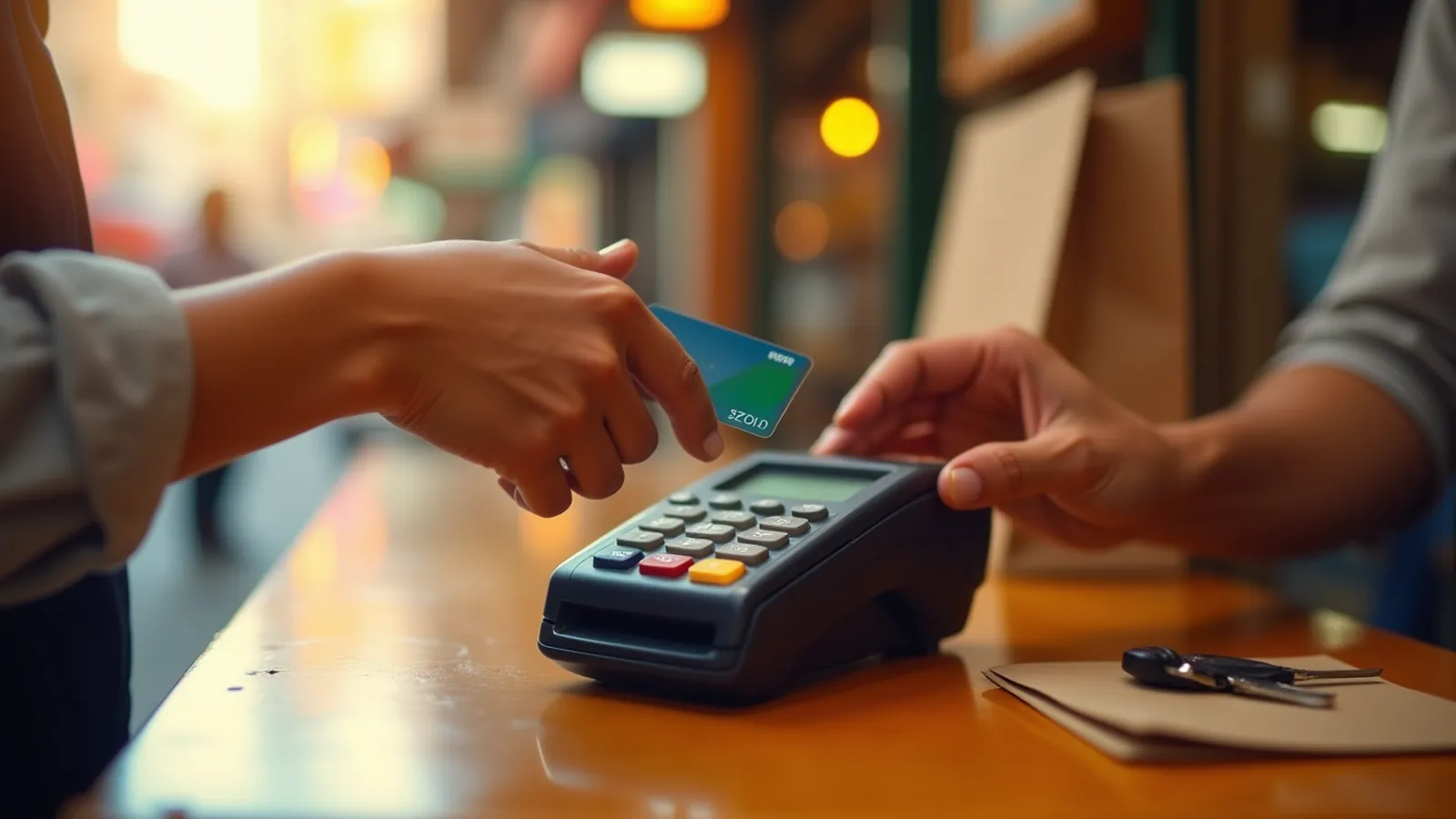
The last step is short, and it is what makes the exchange feel finished rather than abandoned.
You may also hear ¿Quiere el recibo? (would you like the receipt?). No, gracias is a complete answer; if you want it, say Sí, por favor.
Cover and recall.
Reading a phrase again feels productive. Pulling it out of memory is what a counter actually asks of you. Cover the tables above, then say or write the Spanish for each prompt before you check.
| English prompt | Your Spanish |
|---|---|
| Can I pay by card? | your phrase |
| Do you accept cards? | your phrase |
| Cash only. | your phrase |
| Could you repeat that, please? | your phrase |
| Here you are. | your phrase |
Check your answers: ¿Puedo pagar con tarjeta? · ¿Aceptan tarjeta? · Solo efectivo. · ¿Puede repetir, por favor? · Aquí tiene.
- I can catch a total and ask for it again.
- I can ask to pay by card in one short question.
- I can answer solo efectivo without switching to English.
Use the examples whenever you need them. This is practice, not a proficiency test.
If apps left you tapping, not talking.
Points and streaks reward tapping a screen; a person waiting at a till is a different skill. This page is a script, not a game: four steps, one line for each, and the replies to expect. There is no account and no microphone, so you can read it, say it aloud and close the tab.
The second worry is fair too: a free plan that exists only to sell something. The free 7 Day Spanish Starter Plan is five pages with one small task a day, and the whole plan is printed on its web page, so you can work from it without downloading anything. The paid options are planned, not open for booking: the pricing page lists planned prices and says what is still unconfirmed, and there is no checkout today. The refund and editorial policies are published on the site as well.
Common questions.
How do you say “can I pay by card” in Spanish?
¿Puedo pagar con tarjeta? Spanish uses con for both “by” and “with”, so pagar con tarjeta also covers “pay with card”.
What is “card payment” in Spanish?
El pago con tarjeta. You will see pago con tarjeta on signs and payment screens, but you rarely need to say it aloud.
What does solo efectivo mean?
Cash only. Answer Vale, en efectivo or De acuerdo, en efectivo, or ask ¿Hay un cajero cerca? if you need a cash machine.
Is ¿Aceptan tarjeta? correct in Mexico?
Yes, and it is common there. It addresses the staff as a group; ¿Se puede pagar con tarjeta? works anywhere and avoids choosing a you-form.
Do I need to hear every number in the total?
No. Listen for the currency word at the end, then ask ¿Puede repetir, por favor? or ¿Puede escribirlo, por favor? if you miss the amount.
Practice, not a promise. These tasks help you rehearse everyday Spanish at your own pace. Individual progress varies; nothing here promises a level, a qualification or a fixed learning speed. How we write and check our Spanish
Sources and editorial notes
- Smart Learning Path, 7 Day Spanish Starter Plan (Day 4, the café counter dialogue) and Spanish Conversation Rescue Card, our own free workbook materials.
- Institute of Education Sciences, What Works Clearinghouse, Organizing Instruction and Study to Improve Student Learning (practice guide, 2007), retrieved October 18, 2026. Its recommendations include spacing learning over time and using quizzing to prompt retrieval; the recall table above is a small, simple version of that idea.
- Real Academia Española and ASALE, Diccionario panhispánico de dudas, “tilde” (the adverb solo written without an accent where there is no ambiguity), retrieved October 18, 2026.
The dialogue and the amount in it are illustrative examples written for this page, not a recorded conversation or a real receipt. Payment habits, card machine names and currency words differ between countries. Spanish checked by our editors. See our Editorial Policy. Spotted a mistake? Suggest a correction.
Related reading.
Back to the blogAsk for the Bill in Spanish
Ask for the bill, pay by card, and split a bill.
Order Coffee in Spanish with a Simple Dialogue
A short café exchange you can adapt.
How to Ask Someone to Repeat or Slow Down in Spanish
Polite phrases for a fast or unclear reply.
Try one useful task.
Open the free seven-day plan and practise about ten minutes a day, at your own pace.
No account or payment needed.