
Everyday situations
Contactless payment in Spanish: four lines at the till.
The total arrives, then the card question, and both land at once. Here is the whole exchange in four lines, with the yes answer, the no answer and a role play you can run alone.
Practice dialogues written for this page, not recordings.
You can hear the total. You can even see the card reader on the counter. What you cannot do, in the two seconds before the cashier looks up, is produce the sentence that asks whether you can pay with it.
So you hand over cash you had to hunt for, and walk out with the familiar thought: all those app evenings, and still nothing comes out. The panic at a till has two steps — first the number, then the question about how you will pay — and both can be rehearsed.
The whole exchange is about four lines, two of them yours: ¿Cuánto es? · Son cincuenta pesos. · ¿Puedo pagar con tarjeta o con el móvil? · Acérquelo. Below: catching the total, asking the card question, reading a yes or a no, and running it as a role play.
What this page is. A four-line till script, the lines that come back at you, and a repeat-aloud drill — free to read, no account, no microphone, and no affiliate links on this page. The site does sell optional extras, its own phrase packs and a course; the pricing page says plainly what each costs. The test is simple: this page should make you say something out loud.
Your task: run one complete payment exchange aloud — hear a total, ask about card or phone, handle a yes and a no, and finish with Acérquelo — in about ten minutes.
Practise with a seven-day plan.
The free 7 Day Spanish Starter Plan gives you a pronunciation day, seven days of phrases with a dialogue, a listening task and recall prompts, three goal tracks, an answer key and a tracker, 10 to 15 minutes a day. Use it on the web or download the 18-page PDF.
The complete plan is free and open on the web. Enter your email for the printable copy.
First, catch the number.
¿Cuánto es? is how much is it? The answer rarely arrives as a bare number; it comes as a short sentence. Son cincuenta pesos is literally they are fifty pesos, with son because pesos is plural. The currency changes with the country (pesos in Mexico, euros in Spain); the shape of the sentence does not.
| Spanish | English |
|---|---|
| ¿Cuánto es? | How much is it? |
| Son cincuenta pesos. | It is fifty pesos. |
| ¿Me lo puede repetir, por favor? | Could you repeat it for me, please? |
| ¿Hay un mínimo? | Is there a minimum? |
If the number goes past you, say so before you guess. In Mexico you will also hear ¿Mande? used to ask someone to say it again — normal and polite there, unusual in Spain. Say prices aloud at home, then work through the written price drill so your ear meets the same figures inside a sentence: Understand prices in Spanish at speed.
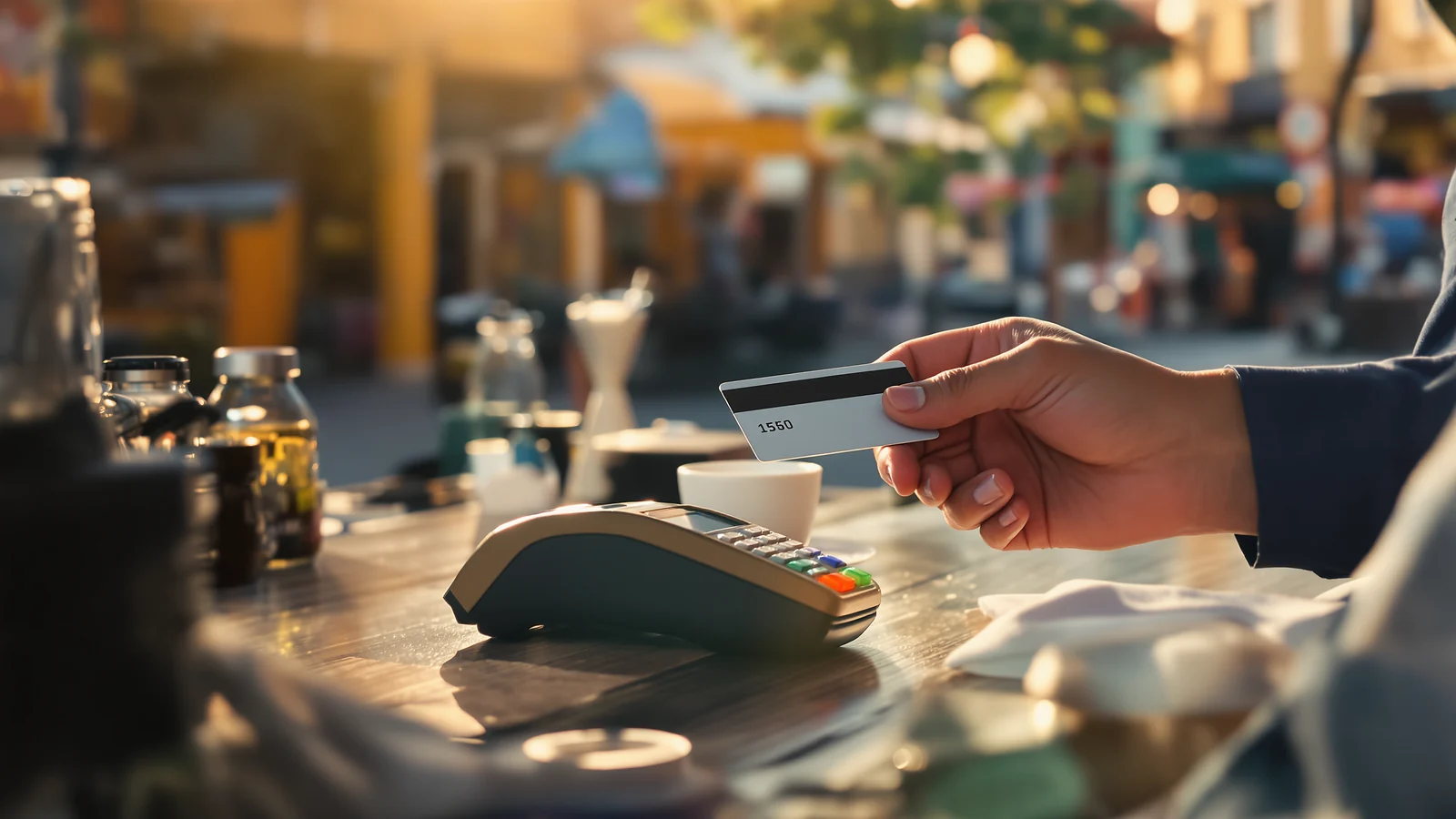
Then ask the card question.
Ask once, in one sentence, and make it a permission question. ¿Puedo…? is can I…? and it is softer than a statement. Pago con tarjeta (I will pay by card) is the version for when they have already asked ¿Efectivo o tarjeta? and you are simply answering.
| Spanish | English |
|---|---|
| ¿Aceptan tarjeta? | Do you accept cards? |
| ¿Puedo pagar con tarjeta o con el móvil? | Can I pay by card or with my phone? |
| Sí, claro. | Yes, of course. |
| Sí, pero el mínimo son cien pesos. | Yes, but the minimum is a hundred pesos. |
| No, lo siento, solo efectivo. | No, sorry, cash only. |
Two words change by country: in Spain you pay con el móvil, in Mexico con el celular. Each is understood on both sides, so learn the one you will hear around you. Spanish varies from country to country in more than vocabulary; Lingoda’s own Spanish course page notes the differences between the Spanish of Spain and of countries such as Mexico.
The answer you want is short — Sí, claro, or Con tarjeta, sí. The answer you need to be ready for is short too. For a no, keep one sentence ready so the conversation does not stop: Entiendo. ¿Hay un cajero cerca? (I see. Is there a cash machine nearby?).
Acérquelo is the whole instruction.
Acérquelo comes from acercar, to bring close, plus lo, it. One word, and it is the entire instruction for a contactless payment: hold it here. You may also hear Acérquela, because la tarjeta is feminine — the same instruction with a different object.
| Spanish | English |
|---|---|
| Acérquelo, por favor. | Hold it here, please. |
| Inserte la tarjeta. | Insert the card. |
| Introduzca su NIP. | Enter your PIN. |
| Ya está. ¿Quiere su ticket? | That is it. Do you want your receipt? |
The rest is recognition rather than production. Inserte la tarjeta if the card has to go in, Introduzca su NIP for the number (Mexican keypads often say NIP where Spain says PIN), and Ya está or Listo when it has gone through.
The polite phrases that hold it together.
Polite phrases in Spanish are not decoration. They are the difference between a four-word demand and something a stranger is glad to answer, and they never change with the situation.
| Spanish | English |
|---|---|
| Por favor. Gracias. | Please. Thank you. |
| Disculpe. | Excuse me (polite, to a stranger). |
| Con permiso. | Excuse me (moving past someone). |
| Perdón, no entiendo. | Sorry, I do not understand. |
Register matters in exactly one of them. Disculpe is the usted form, right for a cashier you have never met; disculpa is the tú form, for someone you know. At a counter, when in doubt, use the puede version.
Rehearse the whole thing out loud.
Here is the exchange twice: once with a yes, once with a no. Both are illustrative practice dialogues written for this page — not recordings, not transcripts — so the cashier you meet will use their own words and their own total.
| Practice dialogue · card accepted | English |
|---|---|
| Caja: Son ciento veinte pesos. | It is a hundred and twenty pesos. |
| Usted: ¿Puedo pagar con tarjeta o con el móvil? | Can I pay by card or with my phone? |
| Caja: Con tarjeta, sí. Acérquela aquí. | Card, yes. Tap it here. |
| Usted: Gracias. ¿Ya está? | Thanks. Is that it? |
| Caja: Ya está. ¿Quiere su ticket? | That is it. Do you want your receipt? |
| Usted: No, gracias. Hasta luego. | No, thanks. See you later. |
Now the version where the card is refused. This is the one worth rehearsing hardest, because it is the one you cannot set up in advance.
| Practice dialogue · cash only | English |
|---|---|
| Caja: Son ciento veinte pesos. | It is a hundred and twenty pesos. |
| Usted: ¿Puedo pagar con tarjeta? | Can I pay by card? |
| Caja: No, lo siento, solo efectivo. | No, sorry, cash only. |
| Usted: Entiendo. ¿Hay un cajero cerca? | I see. Is there a cash machine nearby? |
| Caja: Sí, hay uno en la esquina. | Yes, there is one on the corner. |
Read both parts aloud once.
Cashier and customer, every line. Reading both halves puts the rhythm in your mouth before you produce anything from memory.
Cover your column and answer.
Hide your lines, read each cashier line aloud, answer aloud, then check. If you stall, cover it again and repeat just that pair.
Change one thing each round.
A different total, a different answer, the phone instead of the card. Same script, one new variable — and run the rounds on separate days rather than three times tonight.
Answer these four aloud: How much is it? · Can I pay by card or with my phone? · Sorry, cash only. · Hold it here, please. Check: ¿Cuánto es? · ¿Puedo pagar con tarjeta o con el móvil? · Lo siento, solo efectivo. · Acérquelo, por favor.
- I can ask the price and understand a short total in pesos.
- I can ask about card or phone payment in one sentence.
- I can recognise a yes and a no, and answer the no.
- I can hear Acérquelo and Ya está without translating them.
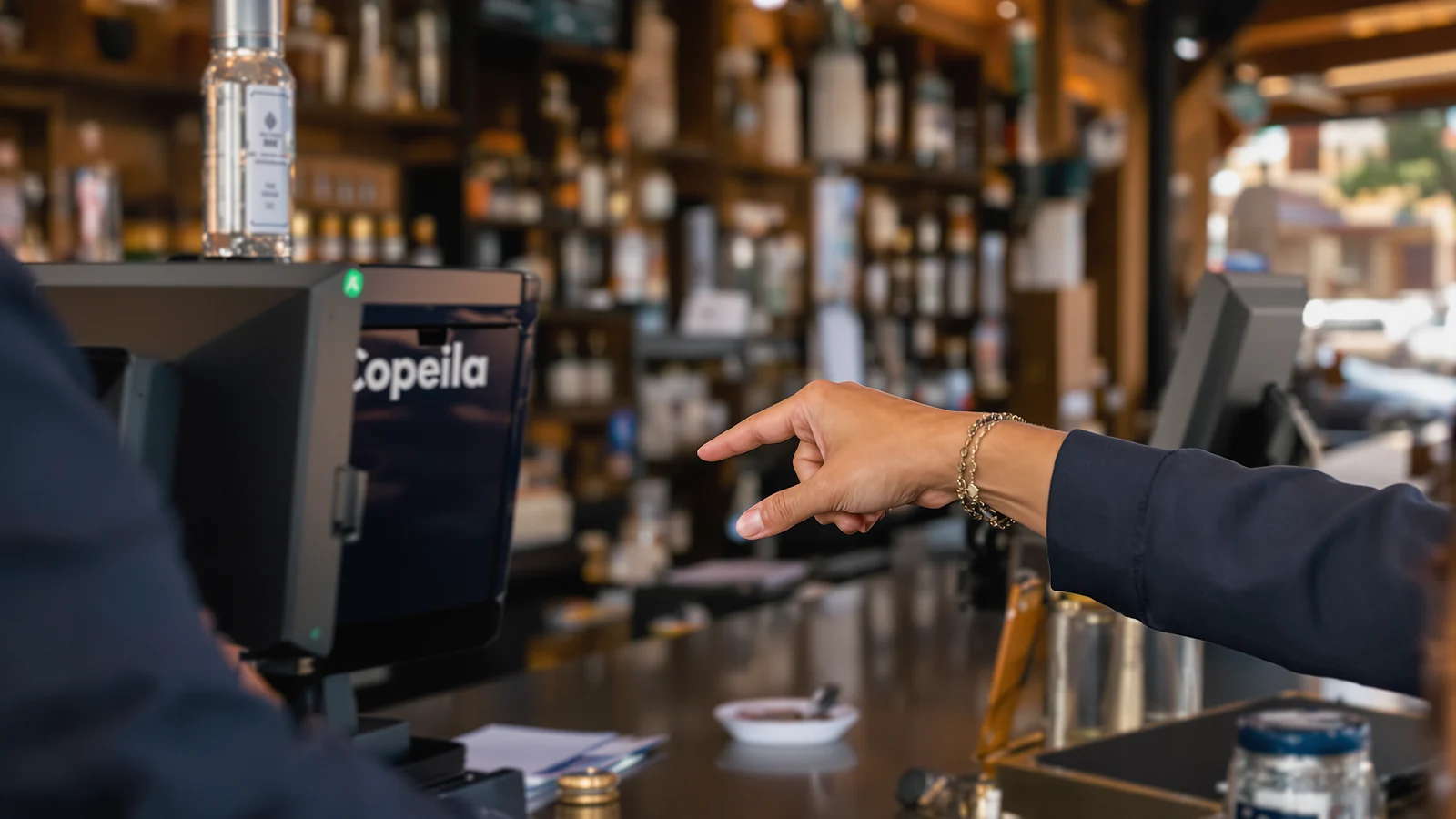
Turn it into a role play script.
A role play script is not a performance. It is two columns on one page — what the cashier says, what you say — with the variables marked so you can swap them. The lines stay put, the answers change, and you have to listen for which one you got.
- The total: son cincuenta pesos · son ciento veinte pesos · son doscientos pesos.
- The answer: Sí, claro · Solo efectivo · Sí, pero el mínimo son cien pesos.
- How you pay: con tarjeta · con el móvil · en efectivo.
Run it three times with three different swaps, saying the cashier lines aloud too. The solo role play guide sets out a six-minute loop of exactly this, and the free ten everyday scenarios are written the same way — café, pharmacy, neighbours, landlord — so you build a small set of scripts instead of a phrase list.
Another app? The honest difference.
Fair objection. An app gives you points for tapping the right tile, and tapping the right tile is not the skill you need at a counter with somebody waiting. No streak tells you whether four lines will come out of your mouth under mild pressure. Here there is no account and no microphone to read this page, nothing is scored, and nobody checks your answers but you — so the only way to find out is to do the drill above aloud. That is practice, not a fluency test.
On the free side, nothing stops at page two. The 7 Day Spanish Starter Plan is an 18-page PDF, and the whole plan is also on the web page, so you can read Day 4, ordering and paying at a café, in the browser before deciding anything. There is a paid side and the honest thing is to say so once: three phrase packs (Travel, Family and Relocation — $9 each, or $19 for all three) and the $49 self-paced course Spanish Conversation Foundations, 28 lessons with no live sessions, teacher or feedback. Both are one-time payments with a full refund within 30 days, set out on the pricing page and the refund policy. Nothing on this page sits behind them.
One next step.
Tonight, with this page closed, say the four lines aloud: the price question, the card question, the yes and the no. Then take the fuller counter script, which walks the same exchange in four steps and gives you a second pass at the same words.
Open the four-step counter script
Also useful, one link each: Day 4 of the free 7 Day Spanish Starter Plan for the café dialogue, and the Conversation Rescue Card for the phrases that buy you time when a question lands too fast.
Common questions.
How do I ask to pay by card in Spanish?
¿Puedo pagar con tarjeta? means can I pay by card? Add o con el móvil — or o con el celular in Mexico — to ask about paying with your phone. The shorter ¿Aceptan tarjeta? asks whether they take cards at all.
What does Acérquelo mean?
It means bring it close, or hold it here. At a contactless reader the cashier is asking you to tap your card or phone on the machine. You may also hear Acérquela, because tarjeta is feminine, or Inserte la tarjeta if the card has to go in.
Which polite phrases in Spanish do I need at a till?
Por favor, gracias and disculpe cover most of it. Disculpe is the usted form, for a stranger; disculpa is the familiar form.
Can I practise this with a role play Spanish conversation script?
Yes. Write the cashier part and your part as two columns, read both aloud once, then cover your column and answer from memory. Change one thing each round: the total, the yes or no answer, or how you pay. More Spanish role play scripts are on the free scenarios page and in the solo role play guide.
Practice, not a promise. These tasks help you rehearse everyday Spanish at your own pace. Individual progress varies; nothing here promises a level, a qualification or a fixed learning speed. How we write and check our Spanish
Sources and editorial notes
- Lingoda, Spanish courses page (on the notable differences between the Spanish spoken in Spain and in countries such as Mexico), retrieved October 18, 2026.
- Smart Learning Path, 7 Day Spanish Starter Plan (Day 4, ordering and paying at a café) and Spanish Conversation Rescue Card (the phrases that buy you time), our own free materials.
All dialogues here are illustrative practice examples written for this page, not recordings of real conversations. Totals, minimums and payment habits differ by shop and by country, so treat the numbers above as things to practise with, not as the amount you will be asked for. Spanish checked with AI review. See our Editorial Policy. Spotted a mistake? Suggest a correction.
Related reading.
Back to the blogPay by Card in Spanish: A 4-Step Counter Script
Hear the total, ask about card, understand the answer.
Understand Prices in Spanish at Speed
Catch 'son cincuenta pesos' and pay without guessing.
Spanish Role Play to Practise Alone: A 6-Minute Loop
A six-minute solo loop that forces a spoken reply.
Try one useful task.
Open the free seven-day plan and practise about ten minutes a day, at your own pace.
No account or payment needed.